


Finding Calm Below Consciousness
by Susan C. Stein, Reading Eagle Company
This article is reprinted courtesy of its publisher, Reading Eagle Company. If you were a scuba diver on the surface of the ocean, you probably would be thrashed by the constant motion of the turbulent waves.
After diving to the ocean's depths, you would see a completely different picture of calm and quiet.
That's how Greg Schweitzer describes the turbulence of our conscious mind, and how, through meditation, we can dive inside ourselves to an area that is silent and still to reach a pure consciousness state of restful alertness.
"It works like magic," said Schweitzer, who has been teaching meditation for more than 20 years, "but we must do it."
He recommends meditating 15 to 20 minutes a day, twice a day, for maximum benefit.
Schweitzer teaches meditation at Stress Reduction Resources, Sinking Spring, and in other facilities.
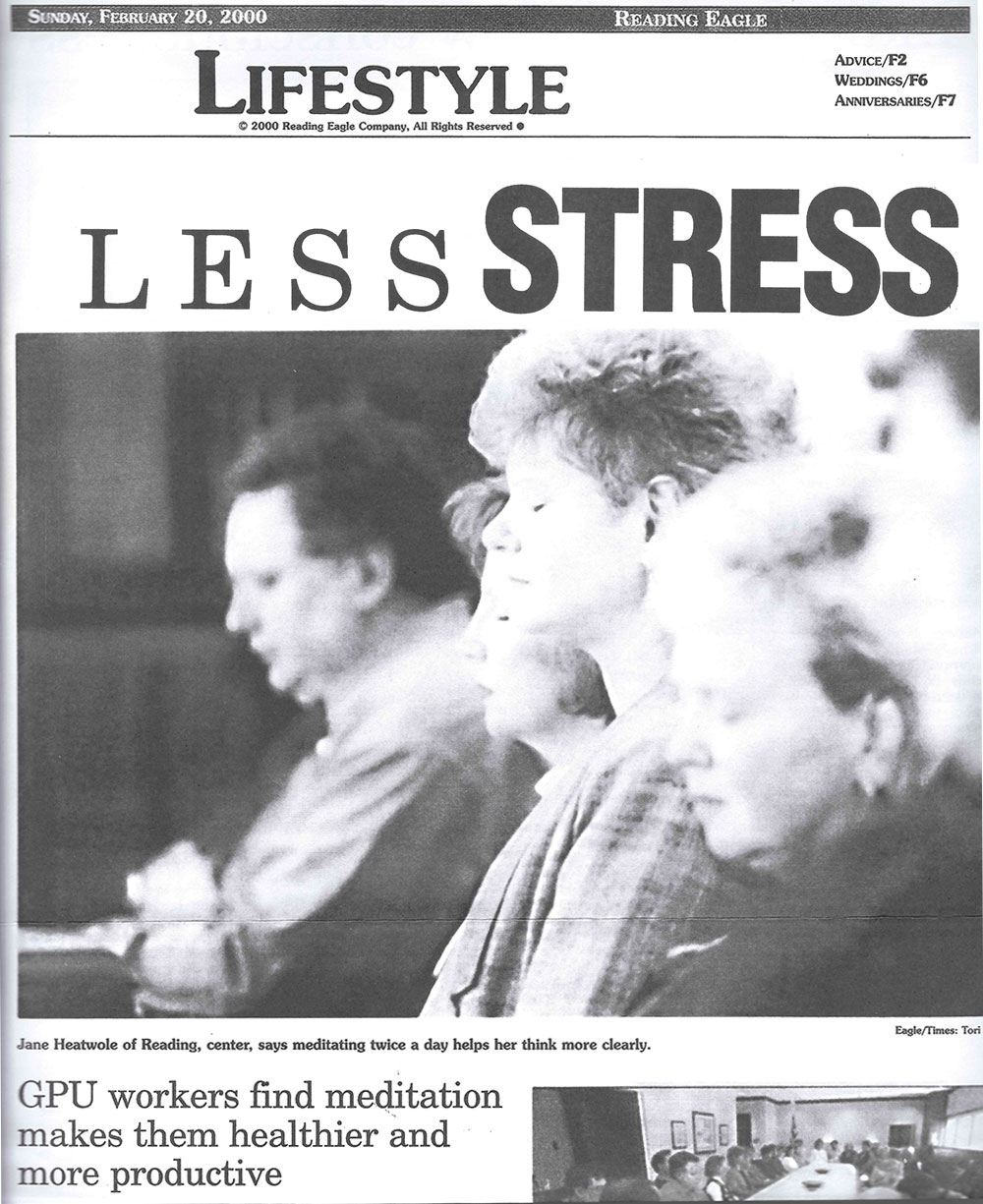
Among his clients have been doctors, students, corporate employees, housewives, college presidents and teachers. They have been patients suffering from ailments such as cancer, headaches, panic disorders or heart disease.
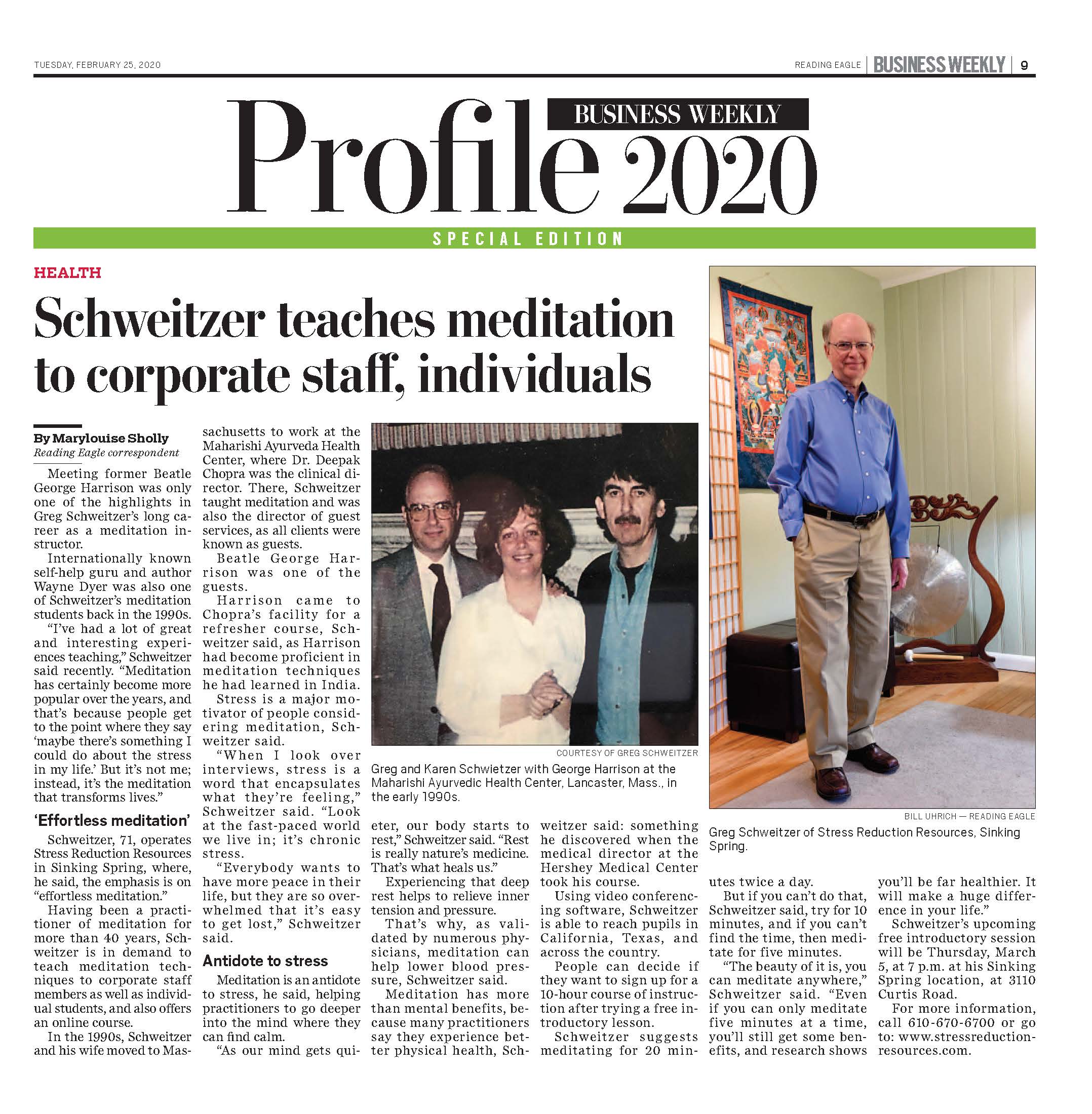
His list of students also includes best-selling author Wayne Dyer ("Your Erroneous Zones") and Barbra Streisand and George Harrison.
They visited the Maharishi Ayurveda Health Center in Lancaster, Massachusetts, under the clinical direction of Dr. Deepak Chopra. Schweitzer taught at the clinic before returning to his Berks County routes.
Schweitzer has more than 5,000 hours teaching meditation technique provided by the Transcendental Meditation organization, which was brought to the United States about 40 years by Maharishi Mitch Mahesh Yogi.
However, because of TM's rising fees, Schweitzer felt he needed to break his ties with the group and teaches his technique of Effortless Meditation.
He stressed that meditation has no religious connection.
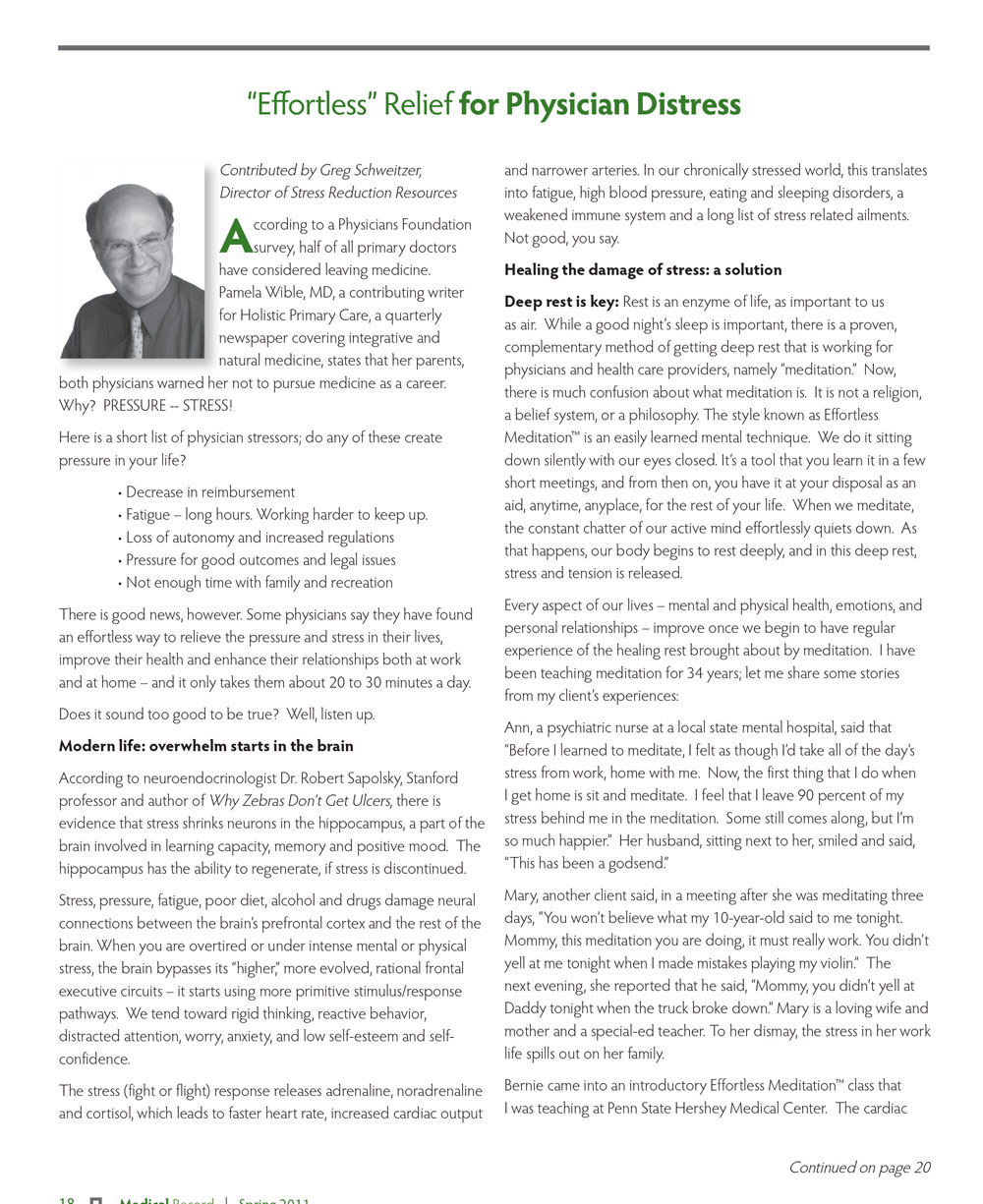
Schweitzer said stress his health enemy No. 1. He estimated that 60 to 90 percent of many diseases, including high blood pressure, diabetes, headaches, cancer and asthma, are linked to stress.
"Our minds can be chaotic, and we can be very stressed," Schweitzer said "Meditation is a mental technique that allows our bodies to experience a level of rest that is even deeper than sleep while the mind remains alert. We experience a state of restful alertness."
Schweitzer said the mind and body are connected like a chair and its legs.
"It's hard to know where one starts and the other begins," he said.
"Psychologists say we use only 2 to 10 percent of our minds," he said. "We have a whole reservoir of energy and intelligence that is untapped."
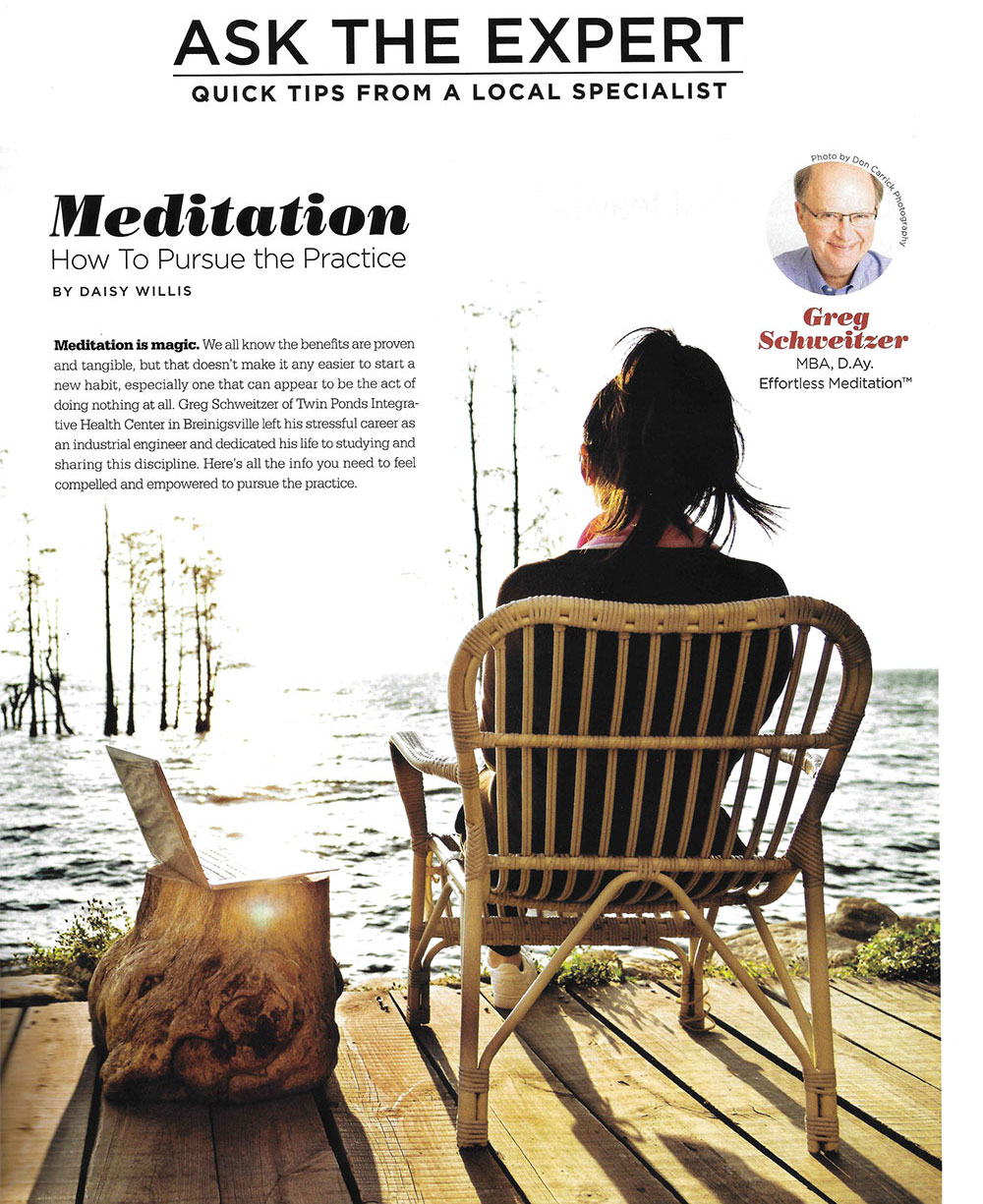
Schweitzer said his meditation is a simple and natural technique anyone older than 10 can learn. It can be practiced anywhere by sitting comfortably with your eyes closed.
"Meditation allows the mind to settle down to a silent state of awareness where the mind is calm, but still fully aware," he said. "When your mind is clear, you can then be more productive and efficient."
According to Schweitzer, there are many books written about meditation, however, most people have little success learning meditation from a book.
"You could not drive a car by reading the owner's manual," he said "you need a teacher to show you firsthand how to drive the car."
"No one has ever told me that my meditation technique didn't work."
Schweitzer said anyone who sits quietly with his eyes closed and concentrates on his breathing can experience some of the benefits of meditation.
|